How Do You Know a Convenience Store Is Charging You the Right Price?
A Pittsburgh-area convenience store alert this week was about health violations, not prices. Here is how to check that you are charged the shelf price, and where to report it in Pennsylvania.
By The Savvy Rabbits Staff ·
✓Checked twice. Fact-checked against the original sources and approved by an editor. About our standards
You can't know for certain, but you can check in about ten seconds. Compare the price on the shelf tag with the price on your receipt, and keep the receipt until you've done it.
Small overcharges work because they're small. A few cents on a drink or a dollar on a pack of something rarely feels worth an argument. Across hundreds of customers, though, the amounts add up, and that is why regulators pay attention to them.
What was the Pittsburgh-area consumer alert about?
Patch reported on Oct. 29, 2026 that the Allegheny County Health Department issued a consumer alert for McKees Mart, a convenience store on Walnut Street in McKeesport. The alert was about health code violations, not prices. According to Patch, an Oct. 27 inspection found mouse droppings, chewed bags of popcorn, chew holes around electrical outlets, and milk drinks that had not been put in a cooler. The department could order the store closed if the problems are not corrected within 10 days.
The rest of this article covers a separate question: how pricing at small stores is checked, and what a shopper can do.
Who checks whether stores charge the right price?
In the US, this is mostly a state and local job. Many states run weights and measures programs that inspect gas pumps, deli scales, and sometimes checkout scanners. The federal National Institute of Standards and Technology (NIST) publishes model rules, such as Handbook 130 and Handbook 44, that states can adopt.
In Pennsylvania, the Department of Agriculture's weights and measures division inspects fuel pumps, scales, and checkout scanner systems, except where a county or city runs its own inspection program. Allegheny County does: its Bureau of Weights and Measures inspects gas pumps, commercial scales, and scanners at retail checkout counters. The state Attorney General's Bureau of Consumer Protection also takes consumer complaints.
Why do shelf and register prices sometimes differ?
Usually the cause is ordinary. A price changes in the store's system, and the shelf tag stays the same, or the other way around. A promotion ends but the tag stays up. A product gets scanned under the wrong item code.
Sometimes it isn't an accident. A tag that stays low while the register charges more is a classic complaint. A receipt can't tell you which it was. It can only show that the two numbers disagree, which is enough to ask about.
How can you check at the register?
Three habits do most of the work:
Look at the price display as items are scanned, if the register shows one.
Read the receipt before you leave the counter, not in the car.
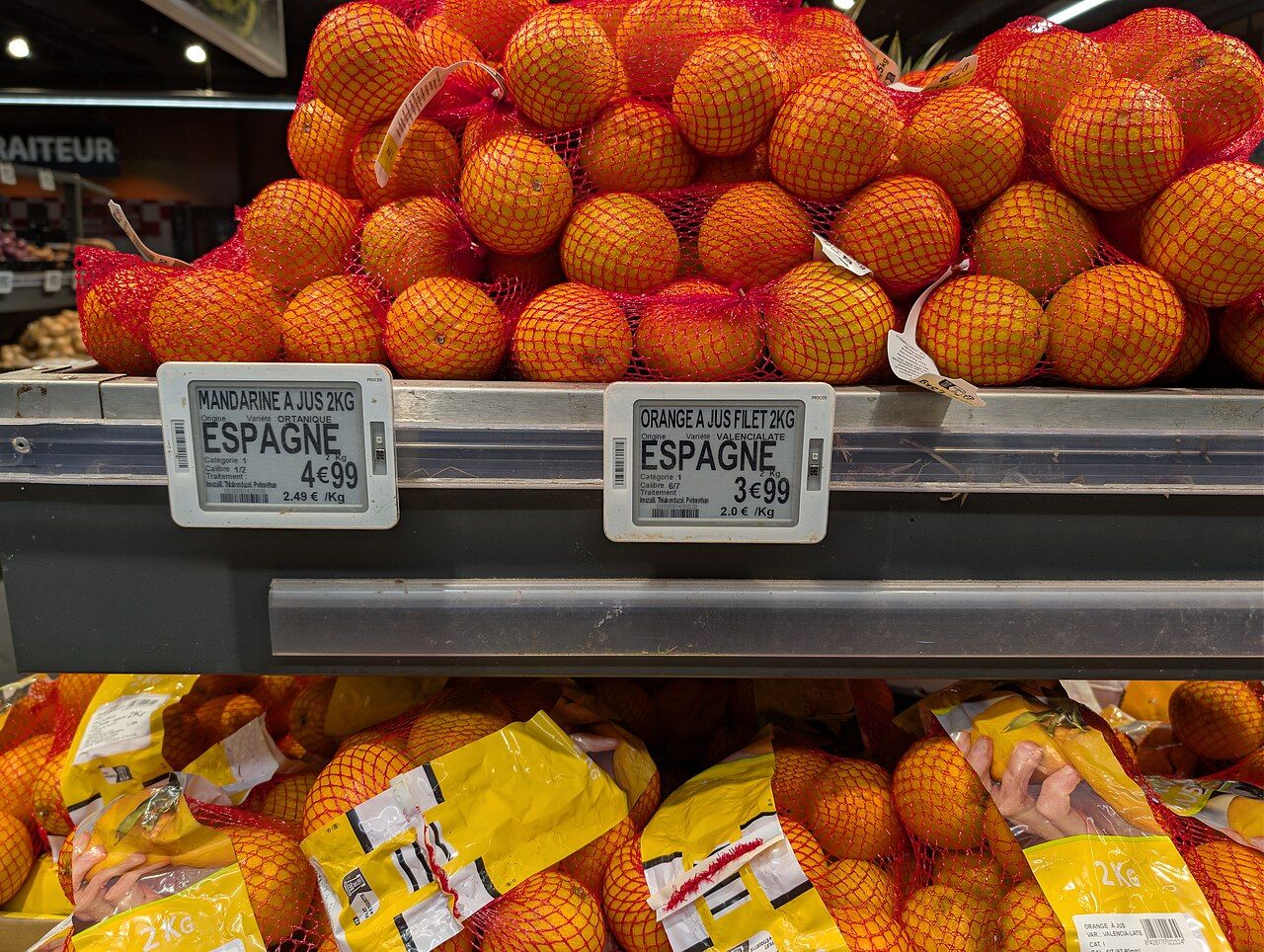
Photograph the shelf tag when a price looks surprising. A photo with the item in frame is better evidence than memory.
Fuel works the same way. The price on the pump or the sign should match what you're charged. If you paid at the pump, the receipt usually shows the rate per gallon.
What if the prices don't match?
Ask the cashier to correct it, and point to the tag. Many stores will fix an honest mismatch on the spot. Some store policies go further, such as giving the item free or at a discount. In Pennsylvania, the Bucks County consumer protection office said in 2014 that state law does not require a free item, but that the store should charge the price shown on the shelf tag or sign.
Pennsylvania's Attorney General has also gone after overcharging at the register. In December 2025, Dollar General agreed to pay the state $1.55 million to resolve allegations that it charged shoppers higher prices at checkout, CBS Pittsburgh reported. The state said the company failed more than 40 percent of pricing accuracy inspections between 2019 and 2023. As part of the deal, the company agreed to post notices at its registers saying the lowest posted price will be honored.
If the store refuses, or the same problem repeats, you can file a complaint. In Pennsylvania, that means the county weights and measures office where one exists, such as Allegheny County's, or the state Department of Agriculture for scanners, scales, and pumps. The Attorney General's Bureau of Consumer Protection also takes complaints. Include the store address, the date, the receipt, and your photo.
Does a consumer alert mean the store did something wrong?
It depends on the alert. A consumer alert is a warning to the public, and what it implies depends on the agency and the facts. The McKees Mart alert followed a health inspection that found violations, according to Patch, and to have the alert removed, the store must provide records of additional pest control visits. It says nothing about the store's prices. A shopper should read the alert itself rather than the headline alone.
This article is for general information only and is not financial, tax, or legal advice. Consider speaking with a qualified professional about your own situation.
Next step: On your next convenience store stop, compare your receipt with the shelf tag before you leave the counter.
NIST Office of Weights and Measures, NIST Handbooks (Handbook 44 and Handbook 130): https://www.nist.gov/pml/owm/publications/nist-handbooks
NIST Handbook 130 (2026), Section II, state adoption of uniform laws and regulations: https://www.nist.gov/document/2026-hb-130-section-ii
Pennsylvania Department of Agriculture, Weights and Measures: https://www.pa.gov/agencies/pda/consumer-protection/weights-measures
Allegheny County, Weights and Measures: https://www.alleghenycounty.us/Government/Departments-and-Offices/Department-Directory/Weights-and-Measures
LevittownNow, "Consumer Corner: Does Pricing Error Allow for Free Item?" (July 27, 2014), answer from Bucks County Department of Consumer Protection: https://levittownnow.com/2014/07/27/consumer-corner-does-pricing-error-allow-for-free-item/
CBS Pittsburgh, "Dollar General to pay Pennsylvania $1.5 million after overcharging customers" (Dec. 9, 2025): https://www.cbsnews.com/pittsburgh/news/dollar-general-pennsylvania-settlement-overcharging
Pennsylvania Office of Attorney General, Bureau of Consumer Protection complaint form: https://www.attorneygeneral.gov/wp-content/uploads/BCP_Complaint_Form.pdf
Our take
This take is opinion, not professional advice.
The Savvy Rabbits Staff
Our editors' take
A receipt proves only that the shelf tag and the register disagree. It can't tell you why. The usual causes are dull, a tag not updated, a promotion that ended, an item scanned under the wrong code, and nobody outside the store can tell those apart from a deliberate overcharge on a single sale. Repetition is what changes the picture. The Dollar General settlement makes the point well, since the state's allegations rested on inspection results, more than 40 percent of them failed between 2019 and 2023, not on one shopper's receipt. One photo of a shelf tag is an anecdote. Several, with dates and receipts, are something a weights and measures office can sort. Compare the tag with the receipt before you leave the counter, while the cashier can still fix it.