Should You Wear a Glucose Monitor If You Don't Have Diabetes?
Glucose monitors are now sold over the counter to people without diabetes. What they measure is real. What it means for healthy people is far less clear.
By The Savvy Rabbits Staff ·
✓Checked twice. Fact-checked against the original sources and approved by an editor. About our standards
For most healthy adults, a continuous glucose monitor is a curiosity, not a necessity. It shows real data, but there is little evidence yet that acting on that data improves long-term health in people without diabetes.
That gap between what the device measures and what the measurement means is the whole story behind the trend.
What is a continuous glucose monitor?
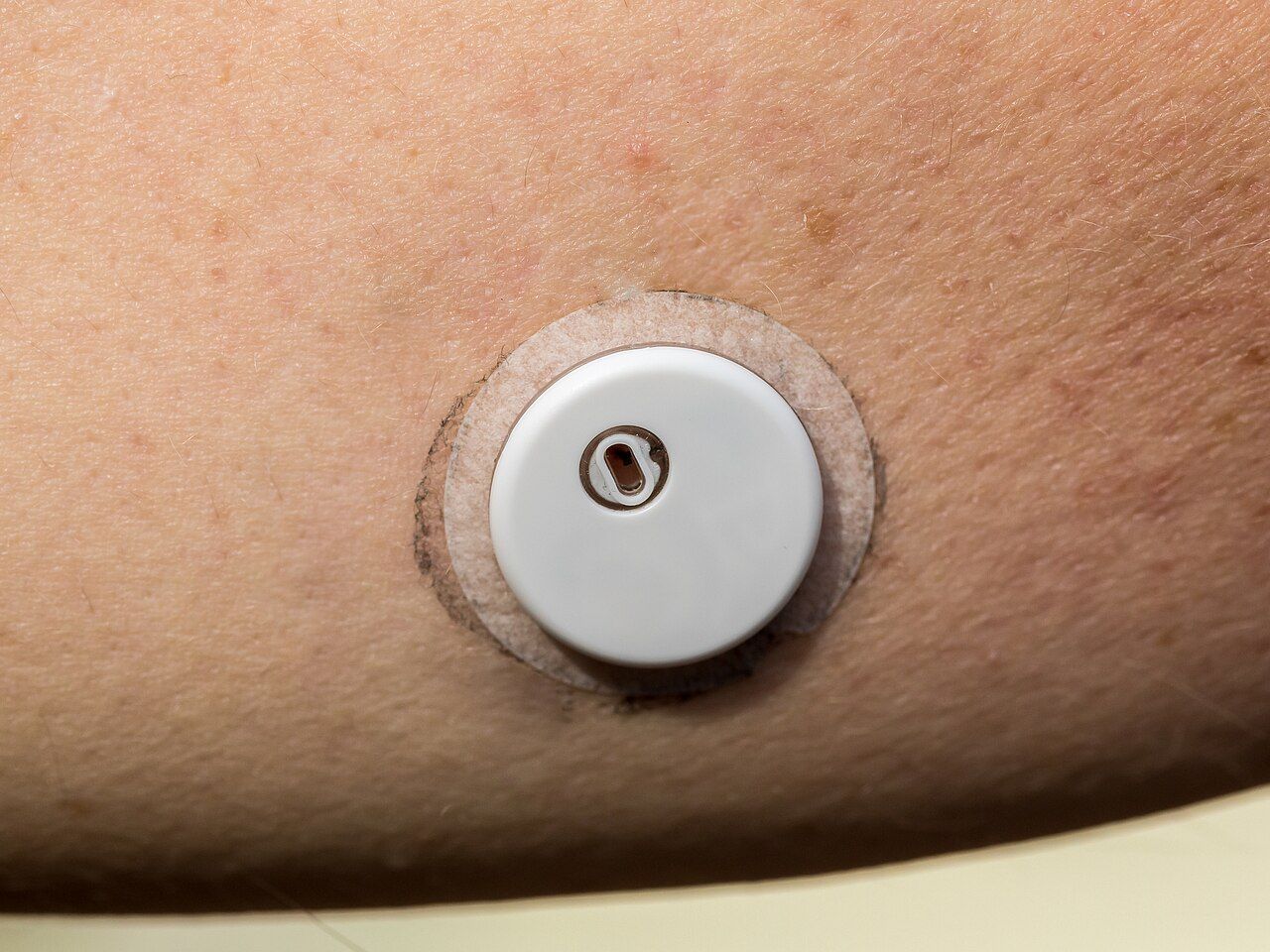
A continuous glucose monitor, or CGM, is a small sensor worn on the skin, usually on the upper arm. A thin filament sits just under the skin and measures glucose in the fluid between cells. It sends readings to a phone app.
CGMs were built for people with diabetes, who use them to manage insulin and avoid dangerous highs and lows. In 2024 the U.S. Food and Drug Administration cleared the first over-the-counter versions: Dexcom's Stelo in March and Abbott's Lingo in late May, which Abbott announced in June. Both are aimed at adults 18 and older who don't use insulin.
What does the wellness trend claim?
The pitch is that food affects everyone differently, and a sensor can show how your body reacts to a given meal. Followers are told to flatten "glucose spikes," the rises in blood sugar after eating, on the theory that smaller swings mean better energy, weight control, and long-term health.
Part of this rests on solid science. The rest is extrapolation.
Do people without diabetes really have different glucose responses?
Yes. In a 2015 study in Cell, Zeevi and colleagues at the Weizmann Institute monitored about 800 people without diagnosed type 2 diabetes for a week. Different people often responded very differently to the same meals. The researchers built a model using gut bacteria, diet, physical activity, and other factors that predicted individual responses to real-life meals.
A 2018 study in PLOS Biology by Hall and colleagues, with 57 participants who had no prior diabetes diagnosis, found something else. Some people classed as normal by standard tests still showed glucose patterns that rose into the prediabetic range at times.
So individual variation is well documented. That is a finding about measurement, not about outcomes.
Is a "spike" actually harmful?
A rise in glucose after eating is normal. The body is supposed to do it, then bring levels back down. A 2019 multicenter study in The Journal of Clinical Endocrinology & Metabolism (Shah and colleagues) put CGMs on 153 healthy children and adults aged 7 to 80 and described what typical readings look like. The median participant spent 2.1% of the time, about 30 minutes a day, above 140 mg/dL.
Whether smaller spikes lead to better health in people with normal metabolism has not been established. Research suggests that sustained high glucose matters for people with diabetes. A 2026 review in JAMA Internal Medicine by Dower and colleagues found only limited and indirect evidence supporting CGM for people with prediabetes or obesity, or with type 2 diabetes not treated with glucose-lowering medicine, and concluded that CGM should be used for a specific patient problem rather than by default. In a press release, the University of Gothenburg, home of one of the authors, summed up the review as finding no scientific evidence that CGM improves health or prevents disease in healthy people.
Can a CGM help anyone without diabetes?
It may help some people notice patterns. Seeing a reading climb after a sugary drink, or stay steady after a meal with protein and fiber, can make habits feel concrete. Walking after meals is often cited as a way to blunt a rise, and that is a low-risk habit regardless.
The honest limit is that these are short-term behavior nudges. They are not proof of a health benefit.
What are the downsides?
There are several, and they are practical.
Accuracy. CGMs measure glucose in tissue fluid, not blood. Readings lag behind blood by a few minutes; Dexcom puts the average for its sensors at about 4 minutes.
Skin reactions. Skin irritation was among the adverse events reported in the Stelo clinical study.
Interference. Some substances can skew certain sensors. Dexcom warns that acetaminophen above the maximum adult dose can make its G6 and G7 sensors read high, and Abbott warns that more than 1,000 mg of vitamin C a day may falsely raise Lingo readings. Check the label for your specific device.
Anxiety. Constant numbers can push some people toward rigid eating. Anyone with a history of disordered eating should talk to a clinician before trying one.
Cost. Sensors are sold in small batches and the expense adds up. In October 2026, Dexcom's Stelo site listed a one-month supply of two sensors at $99 as a one-time purchase, or $89 a month on a subscription, and Abbott's Lingo site listed a two-week, one-sensor plan at $54.
If the curiosity is strong, bring it to a clinician first. Ask whether your family history or symptoms warrant a standard blood test, and whether a short CGM trial would add anything useful in your case. That conversation costs little and gives the data context.
This article is for general education only and is not medical advice. Talk to a doctor or other qualified health professional before changing your diet, supplements, medication, or treatment.
Sources
Zeevi D. et al., "Personalized Nutrition by Prediction of Glycemic Responses," Cell, 2015 (abstract record): https://cris.haifa.ac.il/en/publications/personalized-nutrition-by-prediction-of-glycemic-responses/
Hall H. et al., "Glucotypes reveal new patterns of glucose dysregulation," PLOS Biology, 2018: https://pmc.ncbi.nlm.nih.gov/articles/PMC6057684/
Shah V.N. et al., "Continuous Glucose Monitoring Profiles in Healthy Nondiabetic Participants: A Multicenter Prospective Study," The Journal of Clinical Endocrinology & Metabolism, 2019 (abstract record): https://scholarlycommons.henryford.com/endocrinology_articles/66
Dower J.A. et al., "Continuous Glucose Monitoring in Type 2 Diabetes and Beyond: A Review," JAMA Internal Medicine, 2026: https://jamanetwork.com/journals/jamainternalmedicine/fullarticle/10.1001/jamainternmed.2026.2772
University of Gothenburg, "No evidence that continuous glucose monitors improve health in people without diabetes," 2026: https://www.gu.se/en/news/no-evidence-that-continuous-glucose-monitors-improve-health-in-people-without-diabetes
U.S. Food and Drug Administration, "FDA Clears First Over-the-Counter Continuous Glucose Monitor" (Dexcom Stelo), March 5, 2024: https://www.fda.gov/news-events/press-announcements/fda-clears-first-over-counter-continuous-glucose-monitor
U.S. Food and Drug Administration, 510(k) database entry K233655 (Abbott Lingo Glucose System, decision May 29, 2024): https://www.accessdata.fda.gov/scripts/cdrh/cfdocs/cfpmn/pmn.cfm?ID=K233655
Abbott, "Abbott Receives U.S. FDA Clearance for Two New Over-the-Counter Continuous Glucose Monitoring Systems," June 10, 2024: https://abbott.mediaroom.com/2024-06-10-Abbott-Receives-U-S-FDA-Clearance-for-Two-New-Over-the-Counter-Continuous-Glucose-Monitoring-Systems
Dexcom, sensor vs. meter readings FAQ: https://www.dexcom.com/en-GB/faqs/sensor-vs-meter-readings
Stelo and Lingo product pages (prices, October 2026): https://www.stelo.com/en-us/buy-stelo-one-time ; https://www.hellolingo.com/
CDC, diabetes testing and symptoms: https://www.cdc.gov/diabetes/diabetes-testing/index.html ; https://www.cdc.gov/diabetes/signs-symptoms/index.html
Our take
This take is opinion, not professional advice.
The Savvy Rabbits Staff
Our editors' take
The article keeps two questions apart, and that is the useful part. Can a sensor show that people respond differently to the same food? Yes. Zeevi and colleagues reported that in Cell in 2015, with about 800 people without diagnosed type 2 diabetes. Does acting on those readings make a healthy person healthier years later? The evidence so far is limited and indirect, and the article says so. Think of a bathroom scale that updates every five minutes. It is accurate about weight and silent about whether your weight is a problem. A post-meal rise is the body doing its job. Hall and colleagues in 2018 found some people classed as normal at times reached prediabetic-range readings, which is a measurement finding, not a prognosis. We would add that interference is device-specific: high-dose acetaminophen for Dexcom's G6 and G7, more than 1,000 mg of vitamin C a day for Lingo. Check your own device's label before you trust a strange number.