Does Baking Soda Help Cycling Performance, and Does Timing Matter?
Sodium bicarbonate may modestly help short, hard efforts. A new conference abstract found blood levels peaked about an hour later during easy riding than at rest, but it did not measure performance. Gut side effects and sodium load matter too.
By The Savvy Rabbits Staff ·
✓Checked twice. Fact-checked against the original sources and approved by an editor. About our standards
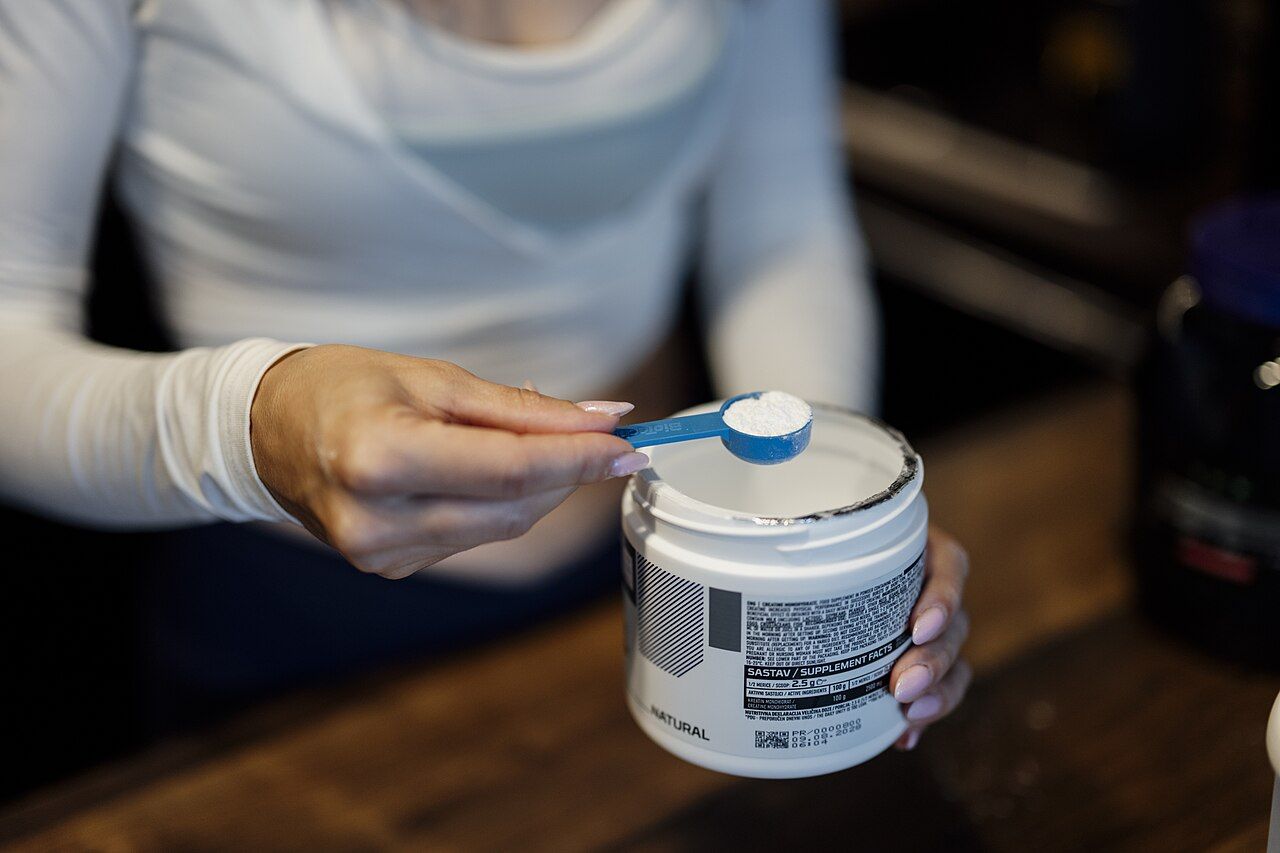
Sodium bicarbonate, the compound sold as baking soda, can modestly improve performance in short, very hard efforts. The evidence is much weaker for long, steady riding, and both timing and stomach side effects complicate its use.
A new conference abstract in the Journal of Science and Cycling, published October 31, 2026, put timing back in the spotlight. Tilmann Strepp and colleagues, from the Red Bull Athlete Performance Center and several universities, gave 14 highly trained cyclists 0.3 grams of sodium bicarbonate per kilogram of body weight, as mini-tablets in a carbohydrate hydrogel. Each rider was tested twice: once with three hours of low-intensity indoor cycling, starting 75 minutes after the dose, and once at rest. Blood bicarbonate peaked about an hour later with cycling, at 208 minutes after the dose on average against 146 minutes at rest, while the size of the rise was similar. The study measured blood levels, not performance, and riders took carbohydrate during the ride but no food during the rest session. Treat the finding as preliminary.
What is sodium bicarbonate supposed to do for an athlete?
The claim rests on a simple piece of chemistry. During hard exercise, hydrogen ions build up and make muscle and blood more acidic. A 2021 position stand from the International Society of Sports Nutrition (ISSN) calls that buildup an important contributing factor to fatigue, while noting that the exact causes of fatigue are still debated.
Bicarbonate is one of the body's natural buffers, meaning it soaks up acid. Taking extra sodium bicarbonate raises bicarbonate in the blood. The idea is that a higher blood pH helps move hydrogen ions and lactate out of working muscle, which delays fatigue. The position stand calls this buffering a widely accepted mechanism but says the mechanisms are not yet fully understood, and that part of the benefit seems to be a placebo effect.
Does it actually improve performance?
Somewhat, in specific situations. A 2011 meta-analysis by Carr and colleagues in Sports Medicine pooled 38 studies of sodium bicarbonate and reported a possibly moderate gain of 1.7 percent, with a margin of about 2.0 percent either way, in a single one-minute sprint at about 0.3 grams per kilogram. The figure is small and its margin runs past zero, though in racing a small gain can matter.
The ISSN position stand, led by Jozo Grgic, reviewed the field in the Journal of the International Society of Sports Nutrition. It says the benefits are mostly established for high-intensity tasks lasting between 30 seconds and 12 minutes. Individual results vary, and some people do not improve.
For a long, steady ride at moderate effort, the evidence is thin. The position stand says bicarbonate may help in prolonged exercise when that exercise includes periods of increased intensity, but that this area needs more research. A hard climb lasting a few minutes fits the research better than a three-hour cruise.
What has been studied on dose and timing?
This is where the new cycling study fits in. The ISSN position stand reports studied doses of 0.2 to 0.5 grams per kilogram of body weight, with 0.3 described as what seems to be the optimal single dose, and higher amounts not appearing to add benefit while bringing more side effects. For single doses, it gives a window of 60 to 180 minutes before exercise. These are figures from research, not a recommendation for any reader. Blood bicarbonate does not peak at the same moment in everyone, and the stand describes considerable variation between people. The new abstract adds that low-intensity riding after a dose may push the peak later, though it tested only one dose, one form, and one riding intensity.
That variation is the practical problem. If the peak comes later than a rider assumes, blood bicarbonate may still be rising when the hard effort arrives. The abstract's authors suggest that timing be adjusted to line up the peak with the critical parts of prolonged exercise, while the position stand recommends individual experimentation around timing, particularly because of side effects. It also notes that most athletes have no access to the blood gas analyzer needed to measure their own peak.
What are the risks and side effects?
The most common problem is the gut. Bicarbonate reacts with stomach acid, and the gas this creates can contribute to bloating and nausea. The position stand lists bloating, nausea, vomiting, and abdominal pain, and also mentions diarrhea. It calls these generally low in incidence, but says they vary between and within people and increase with dose. In one study they canceled the performance benefit, although not all studies have found that. The stand lists smaller doses, earlier intake, a high-carbohydrate meal, and enteric-coated capsules as ways they have been reduced, though capsules are unlikely to prevent diarrhea. No rider in the new abstract reported gut problems, but that was 14 people on one formulation.
Sodium is the second issue. Sodium bicarbonate is about 27 percent sodium by weight. At the 0.3 g/kg dose used in studies, a 70 kg person would swallow about 21 grams, which works out to roughly 5.7 grams of sodium. The World Health Organization advises adults to keep sodium under 2 grams a day, in a guideline dating from 2012. Anyone with high blood pressure, kidney disease, or heart failure has particular reason to avoid this load. UK product information for sodium bicarbonate capsules says the compound should be given extremely cautiously in those conditions and with fluid retention, rules it out on a low-sodium diet and for children under 12, and says it should not be taken in pregnancy or while breast-feeding unless a doctor advises it. The position stand adds that regular use raises habitual sodium intake and that the effects on kidney function are not yet known.
Bicarbonate is also an antacid and can reduce how well the body absorbs some medications. The UK product information names examples including some antibiotics, levothyroxine, and digoxin, and MedlinePlus says it should be taken at least two hours apart from other medicines. Too much can cause metabolic alkalosis, a disturbance of the body's acid-base balance, and low potassium, particularly when the kidneys are impaired. Medication questions belong with a pharmacist or doctor, and no one should adjust prescribed treatment because of a sports supplement.
What is the bottom line?
The best-supported use is narrow: short, intense efforts, in people who tolerate it, and the timing of the peak differs from person to person. It is not a fix for fitness gaps, and the new timing study is one data point, not a rule.
If you are curious, the sensible next step is to read the ISSN position stand linked below, then take its dosing and timing details to a sports dietitian or doctor before trying anything.
This article is for general education only and is not medical advice. Talk to a doctor or other qualified health professional before changing your diet, supplements, medication, or treatment.
Sources
Strepp T, Smith S, Haller N, Jeukendrup A, Stöggl T (2026). "Timing of Sodium Bicarbonate Uptake During Exercise and Rest in Highly Trained Cyclists" (conference abstract). Journal of Science and Cycling 15(2), article 25: https://www.jsc-journal.com/index.php/JSC/article/view/1141
Grgic J, et al. (2021). "International Society of Sports Nutrition position stand: sodium bicarbonate and exercise performance." Journal of the International Society of Sports Nutrition 18, article 61: https://pmc.ncbi.nlm.nih.gov/articles/PMC8427947/
Carr AJ, Hopkins WG, Gore CJ (2011). "Effects of acute alkalosis and acidosis on performance: a meta-analysis." Sports Medicine 41(10), 801-814: https://researchprofiles.canberra.edu.au/en/publications/effects-of-acute-alkalosis-and-acidosis-on-performance-a-meta-ana/
World Health Organization (2012). Guideline: Sodium intake for adults and children: https://www.who.int/publications/i/item/9789241504836
World Health Organization. Sodium reduction fact sheet: https://www.who.int/news-room/fact-sheets/detail/sodium-reduction
Sodium Bicarbonate 500 mg Capsules, Hard, UK summary of product characteristics (electronic medicines compendium): https://www.medicines.org.uk/emc/product/101278/smpc
Sodium bicarbonate, MedlinePlus (US National Library of Medicine): https://medlineplus.gov/druginfo/meds/a682001.html
Our take
This take is opinion, not professional advice.
The Savvy Rabbits Staff
Our editors' take
The number is real but narrow. Strepp and colleagues found blood bicarbonate peaked about an hour later during three hours of low-intensity cycling than at rest, in 14 highly trained riders. It is a conference abstract, and it measured blood levels, not speed. It did not test whether moving a dose makes anyone faster. The better-established evidence is still modest: Carr and colleagues in 2011 reported about 1.7 percent in a one-minute sprint, with a margin of about 2 percent either way, and the 2021 ISSN position stand points to high-intensity efforts of 30 seconds to 12 minutes. We would pay more attention to the sodium arithmetic. About 5.7 grams from one study-sized dose, against a 2 gram daily guideline, is nearly three days' worth in a single sitting. For anyone with high blood pressure, kidney disease, or heart failure, that matters more than the timing.